
Conference, town hall, R&R night or offsite — which format fits your objective?
Most briefs arrive naming a format. It's worth checking the format actually matches the objective, because the wrong one is an expensive way to not achieve something.
6 min read
The right corporate event format follows from the objective: conferences transfer knowledge to a large audience, town halls align employees around leadership messaging, R&R nights recognise individual performance, product launches create external news, dealer meets drive channel-partner commitment, and offsites build cohesion and produce decisions within a small group. Choosing a format that doesn't match the objective is the most common and most expensive corporate event mistake.
Start from the objective, not the format
Most briefs arrive already naming a format — 'we need an R&R night in December', 'we're planning our annual conference'. Often that's correct, because the format is an established fixture in the calendar. But when a new event is being created, it's worth working backwards from what you actually need to be different afterwards.
The question that clarifies it fastest: what should be true a week after this event that isn't true today? If the answer is 'people know something they didn't', that's a conference or a town hall. If it's 'people feel recognised', that's an R&R night. If it's 'the market knows about our product', that's a launch. If it's 'this team can make decisions together', that's an offsite.
Objective to format
- Transfer knowledge to a large internal or industry audience → a conference, with parallel breakouts if the content genuinely splits by audience segment.
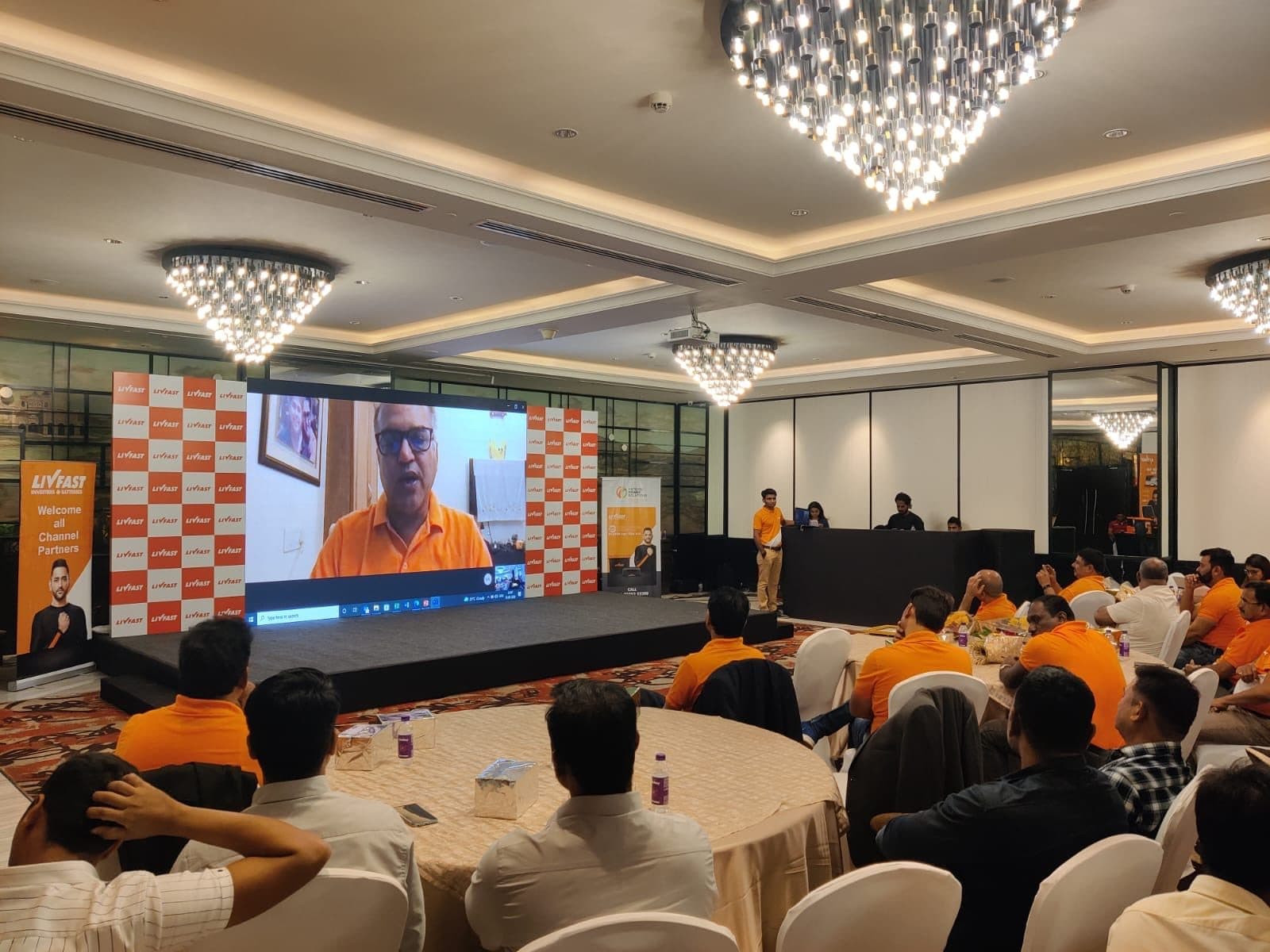
- Align a whole organisation behind a leadership message → a town hall or all-hands, hybrid if the workforce is distributed.
- Recognise individual and team performance → an R&R night, structured as an awards evening rather than a meeting with awards in it.
- Create external news and market awareness → a product launch, designed around a single reveal moment and built for camera as much as for the room.
- Drive commitment from channel partners → a dealer meet, where the business content and the hospitality carry equal weight.
- Build cohesion and reach decisions within a small group → a residential offsite, planned as a multi-day experience rather than a series of sessions.
The most common mismatches
Three mismatches come up repeatedly, and all three are expensive:
- An R&R night run as a town hall. Awards get processed rather than celebrated, the room's energy never lifts, and winners feel administered rather than recognised. The fix is structural — pacing breaks, a real presenter, and staging that photographs well — not a bigger budget.
- A conference used where a town hall was needed. If the actual objective is alignment behind one message, splitting the audience into breakouts works directly against it.
- An offsite treated as a two-day meeting held elsewhere. The value of an offsite comes substantially from the unstructured time; scheduling that time away eliminates the reason for leaving the office.
When one event has to do two jobs
Frequently the budget only supports one event and it needs to serve multiple objectives — a conference with an awards component, or a dealer meet that also launches a product. This works, but only with a deliberate decision about which objective leads.
The practical approach is to separate them in time rather than blend them: business content in the working sessions, recognition or celebration in a distinct evening segment with its own production identity. Blending them usually means neither lands — the awards feel like an appendix to the conference, and the conference content feels like a delay before dinner.
A note on hybrid
Hybrid is worth it when a meaningful proportion of the audience genuinely can't attend in person and the content is one-directional. It's usually not worth it for formats whose value comes from being in the room together — an offsite streamed to remote participants tends to deliver a poor experience to both groups.
Town halls are the format where hybrid works best, because the content is broadcast-shaped by nature and remote Q&A can be ingested cleanly.
Formats mentioned in this guide
Related questions
What's the difference between a town hall and a conference?
A town hall aligns an entire organisation behind leadership messaging and is usually single-track, broadcast-shaped and relatively short. A conference transfers knowledge to a large audience and typically runs longer with parallel breakout tracks. If the objective is everyone hearing the same thing, a town hall is the right shape; if it's different audience segments needing different content, a conference is.
Can one event serve both a conference and an awards night?
Yes, and it's a common brief. The approach that works is separating them in time rather than blending them — business content in the working sessions, recognition in a distinct evening segment with its own production identity and pacing. Blended, neither tends to land properly.
Is a hybrid format worth the additional production cost?
It depends on the format. Hybrid works well for town halls, where the content is broadcast-shaped and remote Q&A can be handled cleanly. It works poorly for offsites and other formats whose value comes from people being in the room together.
Let's talk
Tell us the date. We'll take it from there.
Send an enquiry or message us on WhatsApp — you'll hear back from a planner, not an auto-responder.
Prefer to talk? +91 98905 92695